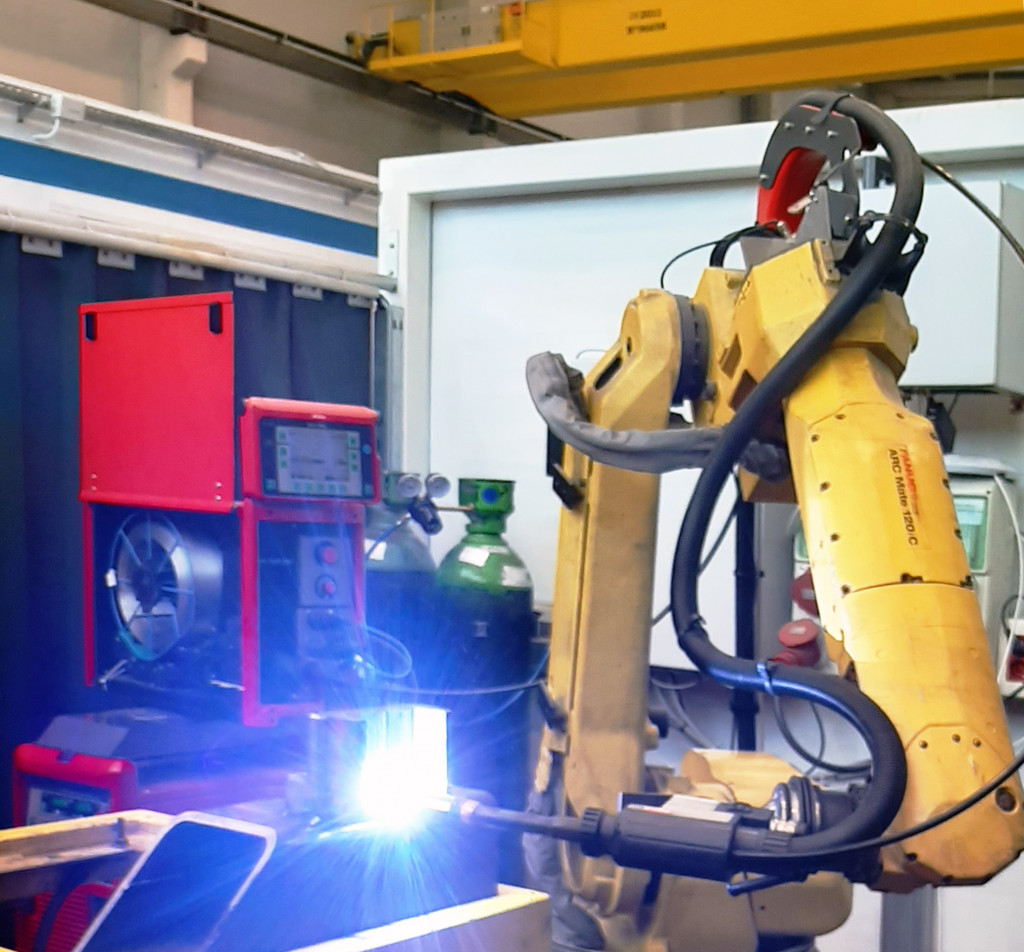
Repair methodology for difficult-to-weld materials with industrial robots
Repairing difficult-to-weld materials with industrial robots requires a careful methodology to ensure an efficient and accurate repair. The methodology to be implemented will be as follows.
- Material evaluation: Before starting the repair process, it is essential to analyse the material and determine its composition, physical and chemical properties, as well as identify damaged areas or in need of repair and choose the most suitable consumable.
- Repair strategy design: A repair strategy should be designed, including selecting the most appropriate welding procedure, preheating strategy, PWHT heat treatments etc., and the sequence of robot movements and welding parameters required.
- Material preparation: To ensure a good weld, the damaged areas need to be prepared and free of any defects.
- Robot and welding equipment configuration: The industrial robot and welding equipment must be configured according to the parameters set out in the repair strategy. This includes programming the robot to perform the necessary movements and adjusting welding parameters such as current, voltage, wire feed speed, etc.
Carrying out the repair: The robot must follow the movements planned and welding in the specific repair areas. It is important to ensure that the weld is good and covers the damaged areas completely.

Target/Challenge
The aim is to provide a robust robotised process for the repair of difficult-to-weld materials, to allow an automated strategy oriented to reduce any issues associated with welding this material.
Result
The expected result is increased productivity, as well as an improved traceability and quality of the repair carried out.
Sectors
 Steel mills and foundries
 Defence
 Renewable energy
 Naval
Naval
 Oil&Gas