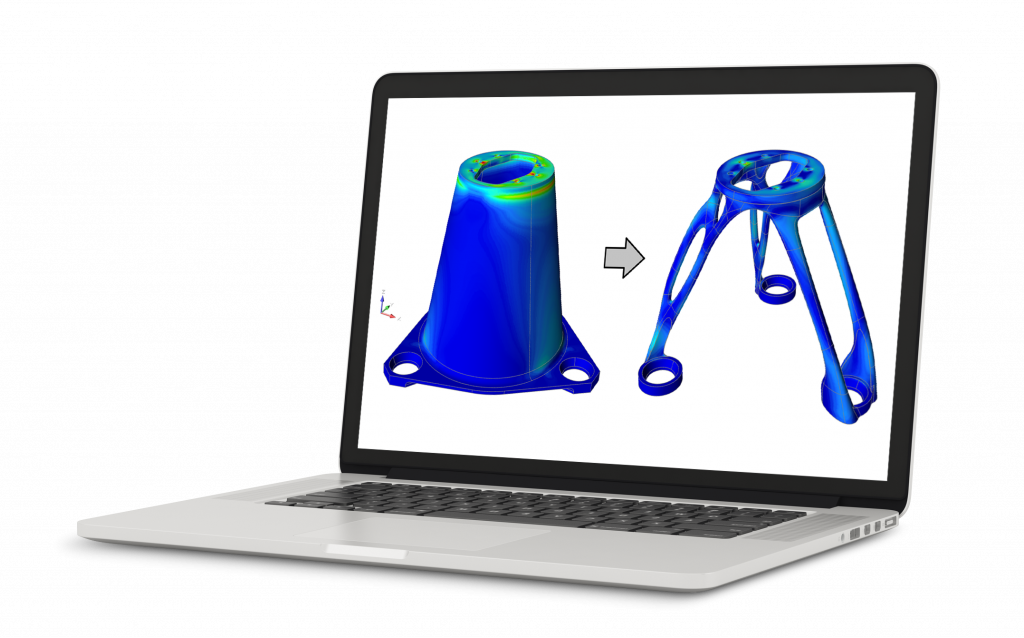
Optimisation algorithms to calibrate, reduce weight and maximise stiffness
Optimisation algorithms play a crucial role in the context of FEM modelling, where efficiency and accuracy are paramount. These algorithms allow optimal solutions for complex problems in structural engineering, process improvement and product design. These algorithms are used to adjust parameters such as geometry, material properties or loading conditions in order to minimise or maximise certain target functions. These functions may represent cost, weight, performance, or any other relevant metric of the system under study. Algorithms iteratively search for optimal combinations of these parameters, improving design and structural efficiency. Optimisation methods in FEM models can be classical algorithms such as Response Surface optimisation method, or modern techniques such as genetic algorithms or Evolutionary Structural Optimisation. These methods allow engineers to explore a broad design space and find solutions that meet multiple constraints and objectives

Target/Challenge
Obtain optimal products and processes that use the minimum number of resources while meeting design requirements. For example, topological optimisation aims to minimise the structure weight (or maximise its stiffness) supporting the loads applied to it.
Result
The combination of optimisation techniques and FEM modelling improves the efficiency of the design process and has a significant impact on innovation by enabling the development of safer, more efficient and economically viable products in multiple industries.
Sectors
 Steel mills and foundries
 Aeronautics-Aerospace
 Automation
 Renewable energy
 Machine-Tool